
Aug 5, 2026
Beach Camping From Destin to the Keys
A coast-by-coast guide to camping near Florida’s best beaches, from the Panhandle’s sugar sand to the coral shores of the Keys.
Read moreJuly 19, 2026 · 3 min read
Few drives in America match the Overseas Highway. Running roughly 113 miles from the tip of the mainland down to Key West, U.S. 1 hops from island to island across more than 40 bridges, with turquoise water on both sides. RVing the Florida Keys is a bucket-list trip for good reason, but it takes a little more planning than a typical road trip. Here is how to do it right.
The Keys are organized by mile markers, small green signs that count down from around MM 113 in Key Largo to MM 0 in Key West. Locals give directions and addresses by mile marker, so it helps to think in those terms. The chain divides loosely into the Upper Keys, the Middle Keys, and the Lower Keys, each with its own character. The famous Seven Mile Bridge near Marathon is the highlight of the drive and separates the Middle from the Lower Keys.
The Overseas Highway is mostly two lanes, and it can be busy. A relaxed mindset matters more here than anywhere else in Florida.
Campsites in the Keys are limited and highly sought after, which is the single most important thing to understand before you go. There is simply not much land, so RV parks book up far in advance, especially in winter. If the Keys are on your list, reserve as early as you possibly can.
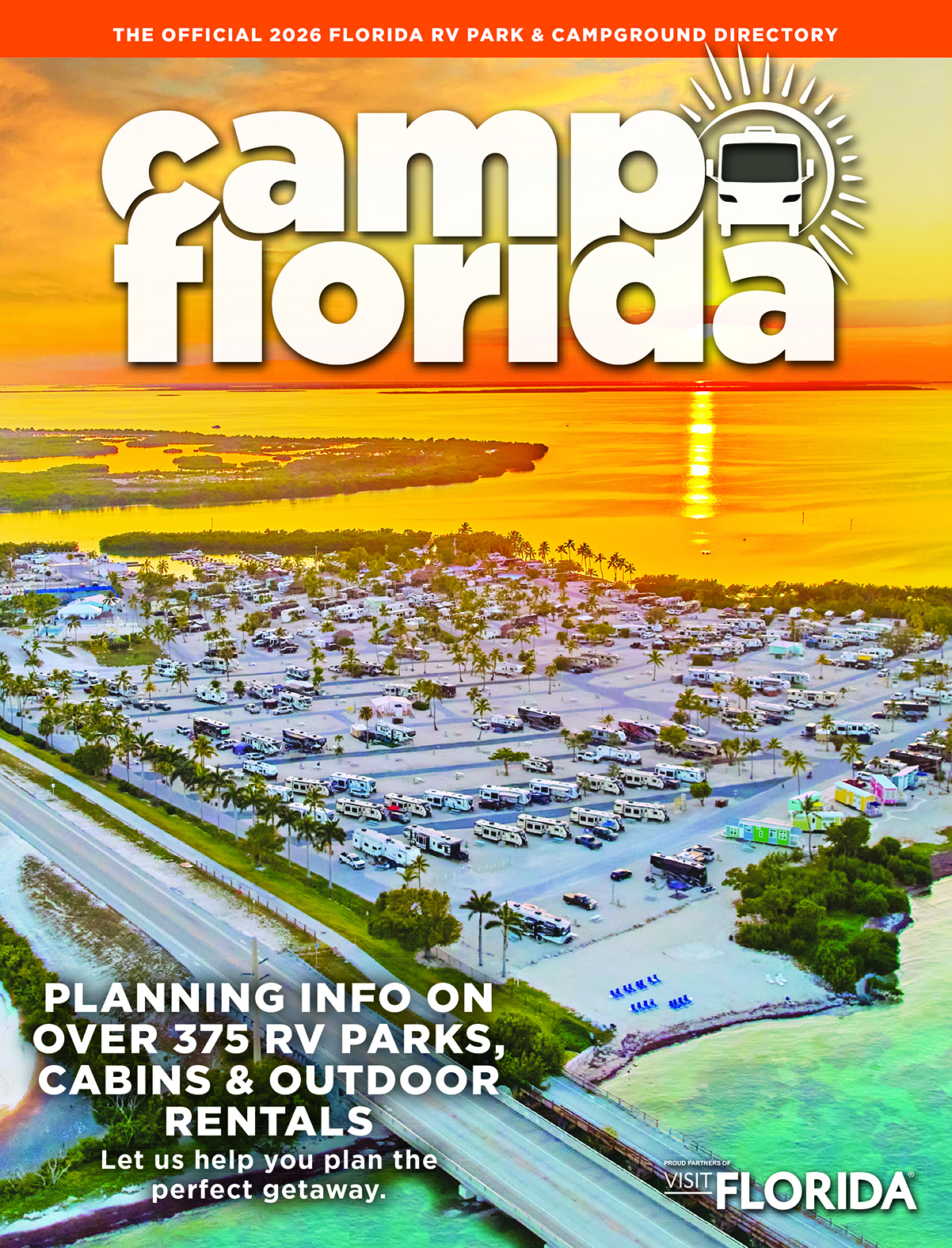
You will find member parks scattered along the island chain, many of them right on the water. Browse our Florida Keys region page to see options from Key Largo down to Key West, and check our waterfront RV parks if waking up to an ocean view is the goal. Because space is tight, larger rigs should confirm site length before booking.
The Keys reward travelers who stop often. In the Upper Keys around Key Largo, the coral reefs offer world-class snorkeling and diving in a protected marine sanctuary. The Middle Keys near Marathon are family-friendly and home to the Seven Mile Bridge and its historic older span. The Lower Keys are quieter and more natural, with excellent paddling and wildlife. At the end of the road, Key West rewards you with sunset celebrations, historic streets, and the southernmost point in the continental United States.
Winter, from December through April, is peak season in the Keys, with warm, dry weather and the highest demand and prices. Summer is hot, humid, and part of hurricane season from June through November, but it brings calmer waters ideal for snorkeling and lower crowds. Late spring and early fall offer a nice balance if you can time your trip around the weather.
RVing the Florida Keys is unforgettable, but it rewards those who plan ahead. Book your site early, drive at island speed, and give yourself time to stop at the water again and again. Start by exploring member parks on our Florida Keys directory, then reserve your spot along the Overseas Highway before the season fills up.
A coast-by-coast guide to camping near Florida’s best beaches, from the Panhandle’s sugar sand to the coral shores of the Keys.
Read moreSeven crystal springs, one long weekend, and the order to hit them so you beat the crowds and the afternoon heat.
Read moreA guide to camping near Florida's crystal-clear, 72-degree springs, including where to go and how to plan your stay.
Read more